Hey gang! My mind is still on the hobby track that I started down in the last email, so I hope that OK with you.
First a little follow-up on my distrust/dislike of the advice to "follow your passion" in one's career: I'm not alone. Here's Michael Ruhlman, who in turn links to this guy. Make of it what you will.
Secondly, I will link to the second episode of the newly released Tim Ferriss podcast in which he talks to Josh Waitzkin, who (aside from being the inspiration for Searching for Bobby Fischer) has quite the impressive résumé of accomplishments. As with all things Tim Ferriss, it's a heady mix of "these guys are really smart and are making very astute points" to "God what a douchenozzle!" and everywhere in between. In the end, though, it's relevant to the whole hobby discussion because Tim and Josh are honest to gosh "experts" on the subject of learning.
As for me, I'm thinking about what happens when you quit a hobby.
It rarely seems to happen that a person actually decides to quit a pastime.
Sure, there's the motorcyclist who has a close call and calls it quits and sells his bike, or the amateur athlete who gets removed from their sport of choice by injury. There are certainly examples available of people actively quitting something they love to do, but more often it seems like a slow death.
For whatever reasons, you do that thing you love less and less and then not at all. During this stage you keep thinking "I should really get back into that thing. I loved it so much!" You still have an interest in the activity. You probably still read the blogs or magazines. You still identify as someone who does that thing.
But then after a while, you stop. You become someone who used to do that thing. You still think of your hobby fondly. Those were good times! You just no longer feel a need or interest in trying to recreate those times by participating in that particular activity.
A switch has flipped. That hobby is finished. End of the road.
I'll stop bullying you with the second person nonsense. This is me I'm talking about.
My prime examples of hobbies that used to be my IDENTITY, but are now nothing more than "a thing I used to do" are martial arts and rock climbing.
Martial arts is my oldest former hobby. I did it when I was a teenager. I've tried a few times to get back into it, but there was just no interest at all. I would say my current participation in CrossFit is filling exactly the same niche for me, but with a different enough modality that it doesn't feel the same. Coincidentally, because CF tends to attract folks with "tactical" interests, my gym is offering a seminar on Pekiti-Tirsia Kali (a Filipino close combat system with a focus on blade fighting), which should be right up my alley. I'm going to pass, though, because it just doesn't pique my interest.
Similarly, I was big into rock climbing when I lived in New England, of all places. Then I moved to Colorado and didn't know anyone to show me around or take me out. I'd go out by myself and visit crags and watch people climbing, but I wouldn't talk to anyone to try to make connections (Ack! Strangers!). Nope, I just stopped rock climbing. Now I actually have friend who climb regularly. I get invited along, but I always tell them it not my thing anymore.
Part of me feels like I should be bummed about these lost interests.
The rest of me is pretty sure that recognizing the fact that I'm "done" with them is a sign of maturity. It goes to the idea of curating your life and prioritizing your time and attention on the things that mean the most to you.
Yes, I guess I'm just too old for that shit.
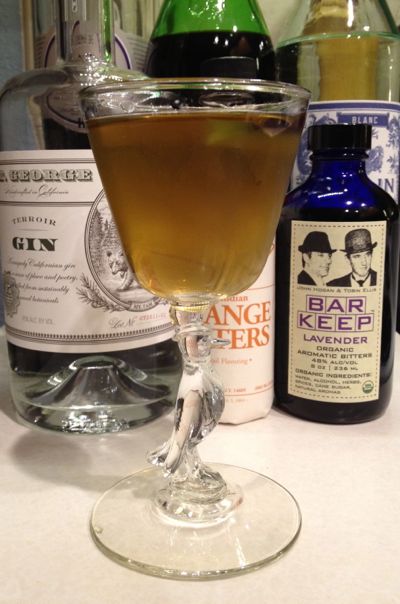
Attention
See what I did there? wink-wink, nudge-nudge

- 2oz Gin (Nothing too crazy. Tanqueray is fine.)
- 3/4oz Dry vermouth (Try Vya or Dolin.)
- 1/4oz Crème de Violette (I use more of this than a lot of recipes because I love the flavor and the color. This is the absolute maximum you can use without blowing away the balance of the drink, though.)
- 1 barspoon Absinthe
- 2 dashes Orange bitters
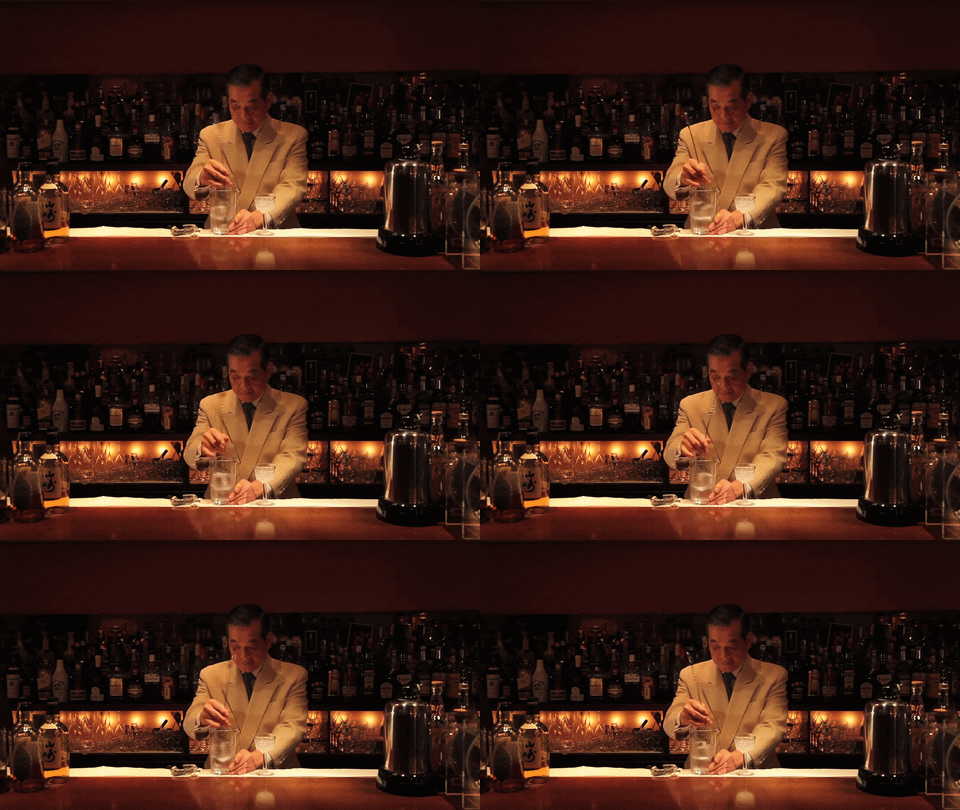
- Stir all ingredients with ice
- Strain into a cocktail glass or coupe
- Garnish with a lemon twist
This drink is just a Martini dressed up like a French pimp (like James Lipton!). That doesn't mean it's not a good thing, though. Sometimes the extra frills and ruffles are a lot of fun.
The Attention is flat out delicious if you ask me. The absinthe does add its signature anise flavor, so you may want to avoid this one if you hate black licorice.
The absinthe and Crème de Violette could be considered "specialty" ingredients, but they are both useful for other drinks, so I don't see a problem.
See also: Aviation and Blue Moon cocktails.